
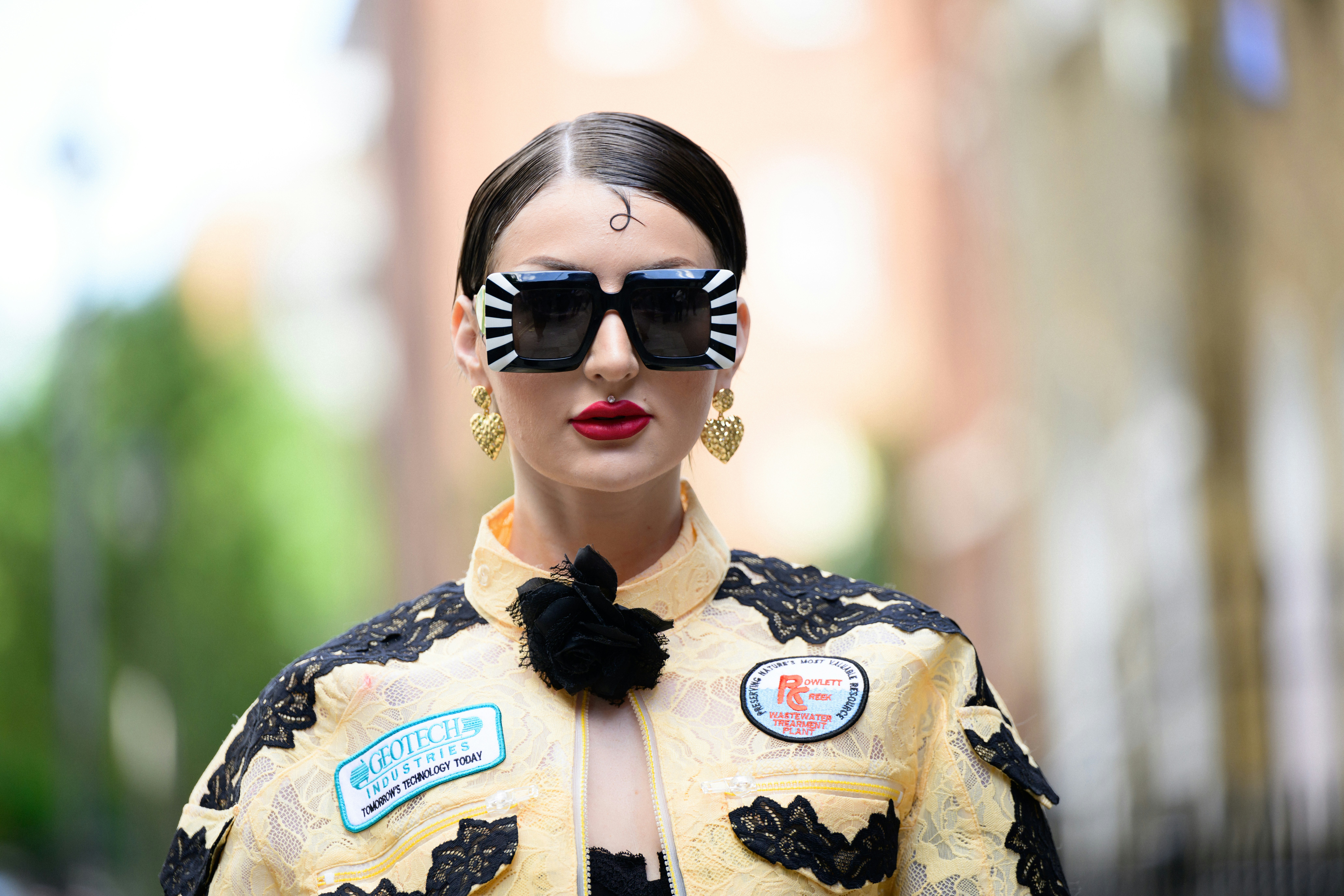

Between raw underground venues, sustainable innovations, and the return of subcultural energy, the latest London Fashion Week proved that the capital’s fashion identity is moving away from spectacle and back toward substance.
By Blend London Magazine Editorial Board
If Paris represents immaculate luxury and Milan stands for industrial precision, London’s relationship with fashion has always been far more volatile, democratic, and urgent.
The latest edition of London Fashion Week underscored a fundamental shift in the capital’s creative industry. In an economic climate where traditional fashion houses are increasingly playing it safe, London reminded the global industry why it remains the world’s most vital incubator for radical design: not through excessive budgets, but through subcultural authenticity, architectural context, and an uncompromising commitment to narrative.
The Venue as a Statement: Decentralising the Catwalk
One of the most striking elements of this season was the complete rejection of traditional, sterile runway spaces. Designers chose instead to weave their collections into the physical and historical fabric of London’s shifting neighborhoods.
From repurposed brutalist car parks in the East End to quiet Victorian churches in Pimlico and historic industrial warehouses along the Thames, the choice of location was rarely decorative—it was integral to the story.
- East London’s Industrial Heritage: Emerging talent pushed further out into former industrial pockets, using raw concrete spaces and disused print works to highlight themes of post-industrial utility, heavy tailoring, and raw textiles.
- The New Elegance of Central Spaces: Established names reframed iconic spaces—including the courtyard of Somerset House and grand Georgian townhouses—contrasting classical architecture with subverted, contemporary silhouettes.
This decentralisation forced the global fashion crowd out of central luxury bubbles and directly into the living, breathing neighborhoods where London’s creative communities actually live and work.
The Return of Subculture and Tailoring
For several seasons, global fashion has been dominated by a homogenous stream of high-end streetwear and minimalist quiet luxury. London LFW offered a powerful antidote: a return to sharp, expressive tailoring heavily rooted in British youth subcultures.
- Reimagined Savile Row: Oversized shoulder lines, deconstructed pinstripes, and exaggerated proportions showed a generation of young designers taking traditional British tailoring techniques and dismantling them with punk sensibilities.
- Subcultural Nostalgia: References to 1990s club culture, indie sleaze, and 1970s romanticism were present across multiple collections. However, rather than straightforward nostalgia, these references were updated with technical fabrics, gender-fluid cuts, and intricate hand-finishing.
- The Fluidity of Expression: Gender-neutral collections are no longer treated as a niche category; they formed the baseline of London’s visual language, with fluid draping and shared wardrobes defining the most compelling line-ups.
Sustainability as a Structural Baseline
If there was one message that emerged clearly from the presentations, it is that “sustainability” is no longer being treated as a marketing buzzword or a token capsule collection. For London’s emerging generation of designers, eco-conscious production is simply the prerequisite for creating art today.
This season highlighted:
- Deadstock & Upcycled Couture: Masterful manipulation of archival fabrics, discarded textiles, and vintage garments turned into intricate eveningwear.
- Material Innovation: Increased presence of bio-based textiles, vegan leathers derived from agricultural waste, and locally sourced British wool worked with traditional craftsmanship.
- Slow Fashion Mindset: A visible reduction in the number of looks per show, focusing instead on longevity, modular design, and garments intended to outlive seasonal trends.
The London Paradox: Resilience Amidst Resistance
It is no secret that designing in London comes with significant financial pressures. Rising studio rents, supply chain complexities, and reduced public funding for the arts have made running an independent fashion brand in the UK harder than ever.
Yet, this exact pressure continues to produce London’s distinct creative resilience. When resources are constrained, imagination becomes the primary currency.
While luxury conglomerates elsewhere rely on celebrity rows and multi-million-pound set designs to generate social media noise, London Fashion Week won the season through pure concept, emotional depth, and raw talent. It proved once again that while other fashion capitals sell luxury, London defines culture.
Blend London Editorial Note: Full collection reviews, designer interviews, and backstage photography from London Fashion Week will be published in our upcoming print and digital feature series.