
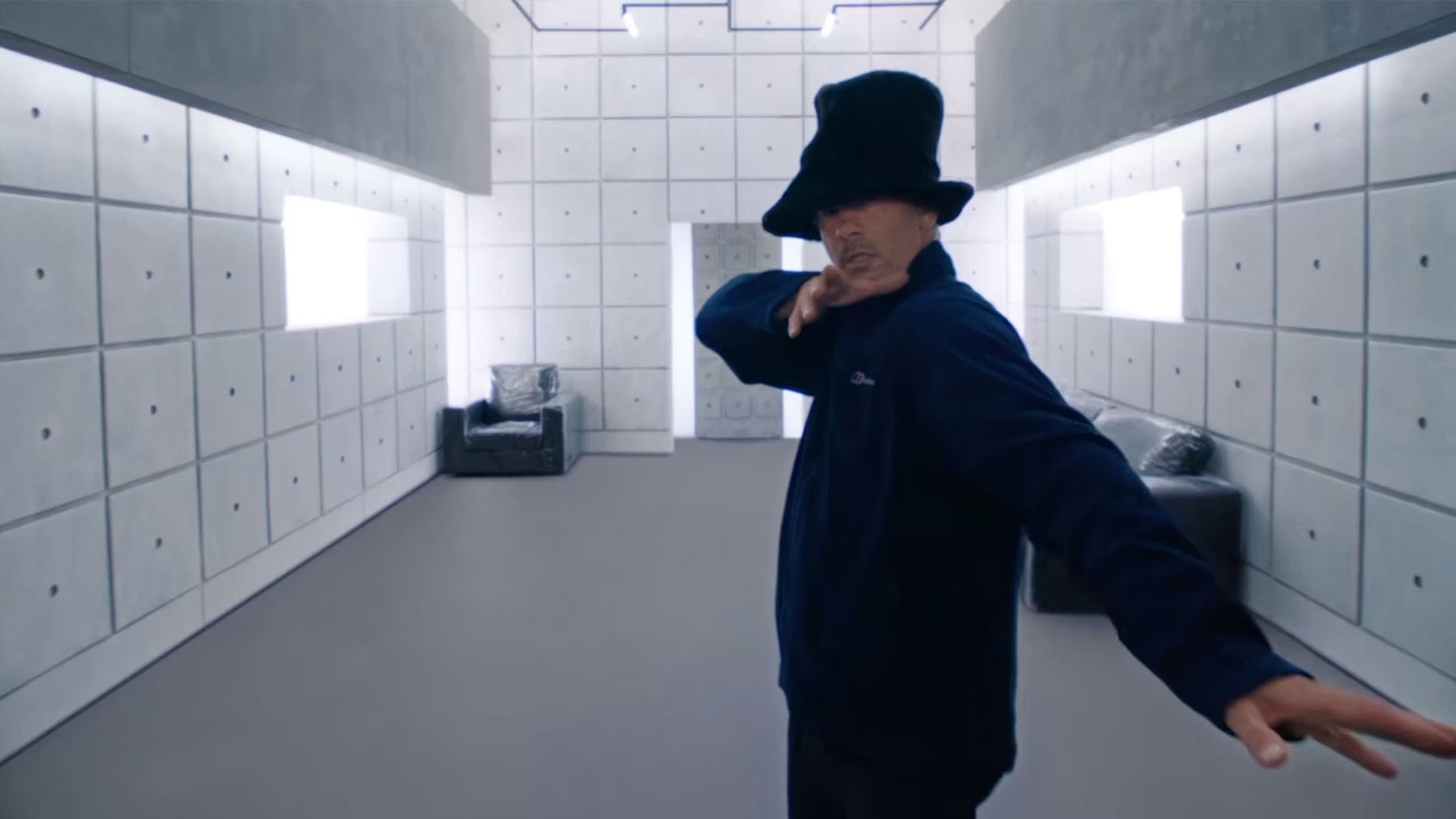

Thirty years after Virtual Insanity bent the collective brain of anyone watching MTV, Jay Kay is back in that impossible white room — only now he finally reaches what he was grasping for. Beefeater 0.0 has partnered with the musician and Lucky Generals to create a playful, surreal sequel to Jonathan Glazer’s 1996 masterpiece, turning one of pop culture’s most dissected illusions into a new invitation to rethink nightlife.
The campaign, directed by Julien & Quentin and produced by Magna Studios, refuses the easy route of digital trickery. Instead, it embraces the same analogue magic that made the original unforgettable: nine hand‑built sets, moving floors, choreography timed to the millimetre, and Jay Kay’s unmistakable physical presence. The moment he grabs the bottle of Beefeater 0.0 becomes a portal, opening into a series of shifting environments that echo the original’s sense of disorientation while pushing it somewhere stranger, lighter, and unexpectedly humorous.
It’s a clever nod to Virtual Insanity’s warning about our obsession with technology — that “useless twisting of our new technology” Jay Kay sang about in ’96 — while celebrating a return to physical craft. In an era where AI shortcuts dominate commercial production, the choice to build everything for real feels almost radical.
Beefeater positions the project within its “Get More With 0.0” platform, which reframes moderation as expansion rather than limitation. The campaign taps into the rise of “zebra striping”, the increasingly common habit of alternating alcoholic and alcohol‑free drinks across a night out. Instead of preaching sobriety, it treats Beefeater 0.0 as part of the rhythm of city nightlife — a way to stay present, keep moving, and experience more.
For Lucky Generals, the 30th anniversary offered the perfect excuse to liberate Jay Kay from the confines of that iconic room. For Julien & Quentin, stepping into such sacred pop‑culture territory was daunting but irresistible: a chance to honour a landmark of music video history while imagining what might happen next.
The campaign will roll out across major global markets, including Spain and Italy, accompanied by influencer collaborations, bespoke bottle designs, behind‑the‑scenes material and even a video‑game tie‑in — proof that the moving room still has momentum.
If the original Virtual Insanity captured the unease of a world accelerating into the digital age, this new chapter feels like a wink: a reminder that some illusions are worth revisiting, especially when they’re rebuilt by hand.