
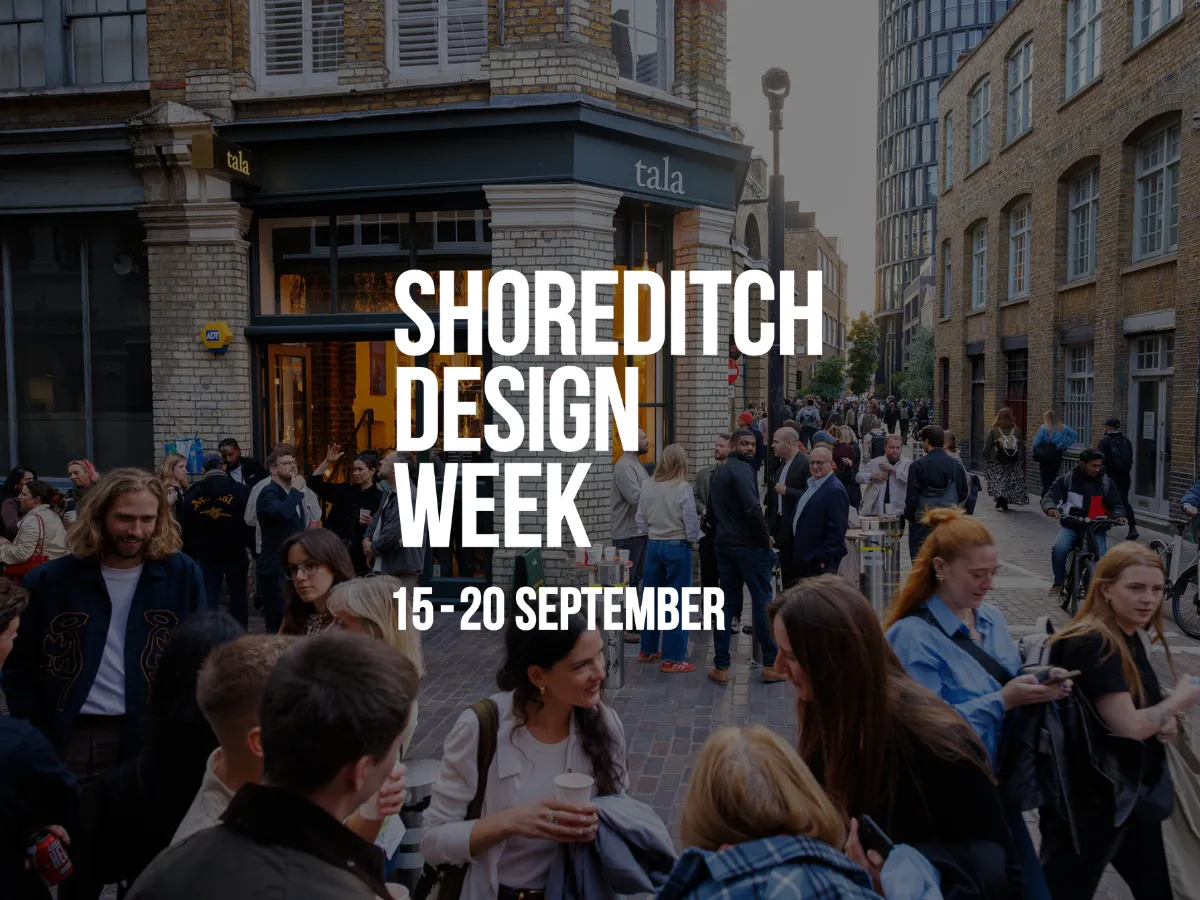

As London prepares for the 24th London Design Festival, all eyes turn to East London for the inaugural edition of Shoreditch Design Week (15–20 September 2026). Evolving from the legacy of the Shoreditch Design Triangle, the district’s new dedicated format signals a major shift: a move away from fragmented, ephemeral street activations toward a consolidated, high-density platform for material intelligence and radical design.
Spanning over 100 showrooms, independent galleries, and temporary interventions, Shoreditch cements its status as London’s largest official design district. But behind the commercial momentum lies a deeper narrative about how space, subculture, and production intersect in the post-industrial East End.
Material Intelligence and Spatial Inclusion
The 2026 programme anchors itself around four major curated trade hubs (running 15–17 September) that bring critical issues to the surface:
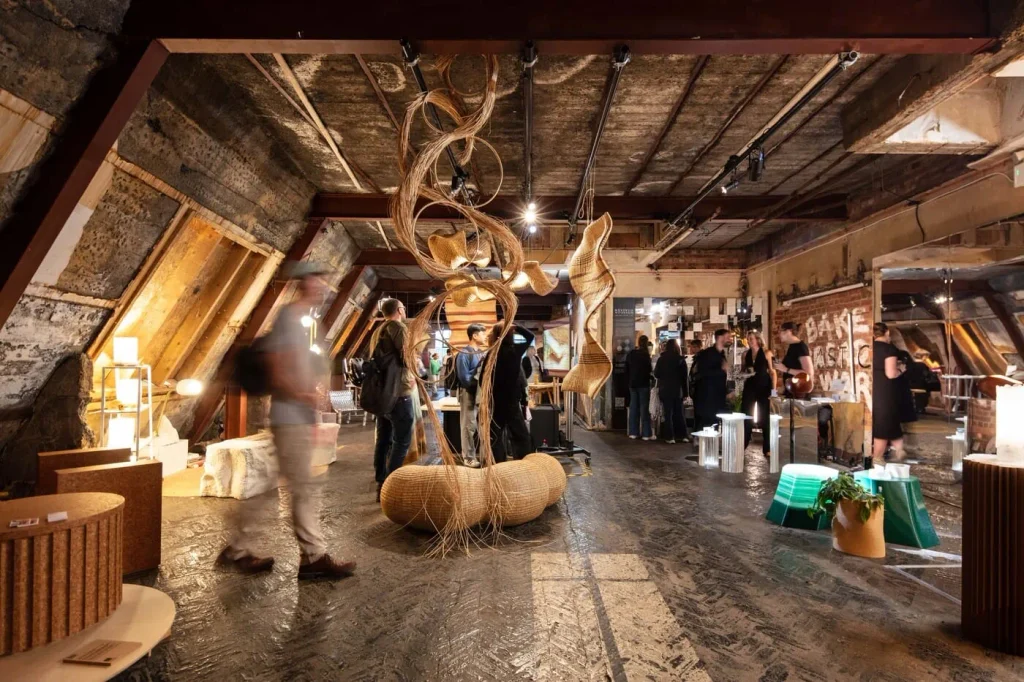
- Material Matters at Unlocked Shoreditch: Celebrating its fifth anniversary with a high-profile relocation to the district, Material Matters shifts the conversation from surface decoration to circular economy, regenerative resources, and low-carbon industrial manufacturing.
- Neuroplaces & Accessible Futures: Debut showcases such as Neuroplaces introduce necessary friction into urban design, challenging architects to move beyond aesthetic minimalism and consider sensory accessibility and neuroinclusive spatial planning.
- Emerging Craft & House of ICON: Beyond established luxury showrooms, independent studios use the district’s industrial warehouses to interrogate the boundary between collectible craft, industrial production, and digital fabrication.
The Blend Takeaway
Shoreditch has long walked a tightrope between raw, underground creativity and rapid commercial gentrification. What makes Shoreditch Design Week 2026 compelling for critical observers is not simply the scale of its trade showcases, but its potential to demonstrate whether design can remain a tool for social and material interrogation—or if it inevitably settles into curated backdrop.
Over the six-day event, East London will act as a live laboratory for the UK creative industry’s immediate future